
What’s his surname?.. Tscheppe? I’ve never seen owt like him
When May rolled around I was invited to Austria with some other wine heads as part of a Sommelier Deep Dive ran by the Austrian wine board, although I was dissapointed when I found out there would be no Scuba Diving.
Austrian wine always holds a special place in my heart as in my early days of learning about wine I fell in love with Judith Beck’s ‘Beck Ink’ which was part of a wine pairing that we served chilled, which of course blew my little corkscrew out my pocket unearthing that it wasn’t only whites that could be served out the fridge. The Burgenland became a bit of an obsession of mine and it’s where I took part in my first harvest at Koppitsch.
Burgenland was also on the menu for this trip towards the end but the main course was visiting the steep rolling hills of Stryia. A region I was first exposed to do at a dinner at Planque in Haggerston where we drank two bottles of 2017 Andreas Tscheppe Salamander, I didn’t know what reduction was back then but I knew I bloody loved it. Unfortunately a visit to Tscheppe wasn’t on the itinerary this time around but that’s because we went to see his brother, Ewald at Weingut Werltisch.
Driving more or less 3 hours south of Vienna, Styria sits on the border with Slovenia. The landscape changes quite dramatically as you enter the pristine and quiet villages driving over bridges with crisp, clear looking rivers. (Looks like Thames water hasn’t corrupted this part of the world just yet) What struck me most was how vividly green the grass and the trees were alongside the super steep hills - my thoughts instantly took to me what strong glutes Styrian’s must have having to clamber up and down during the harvests.
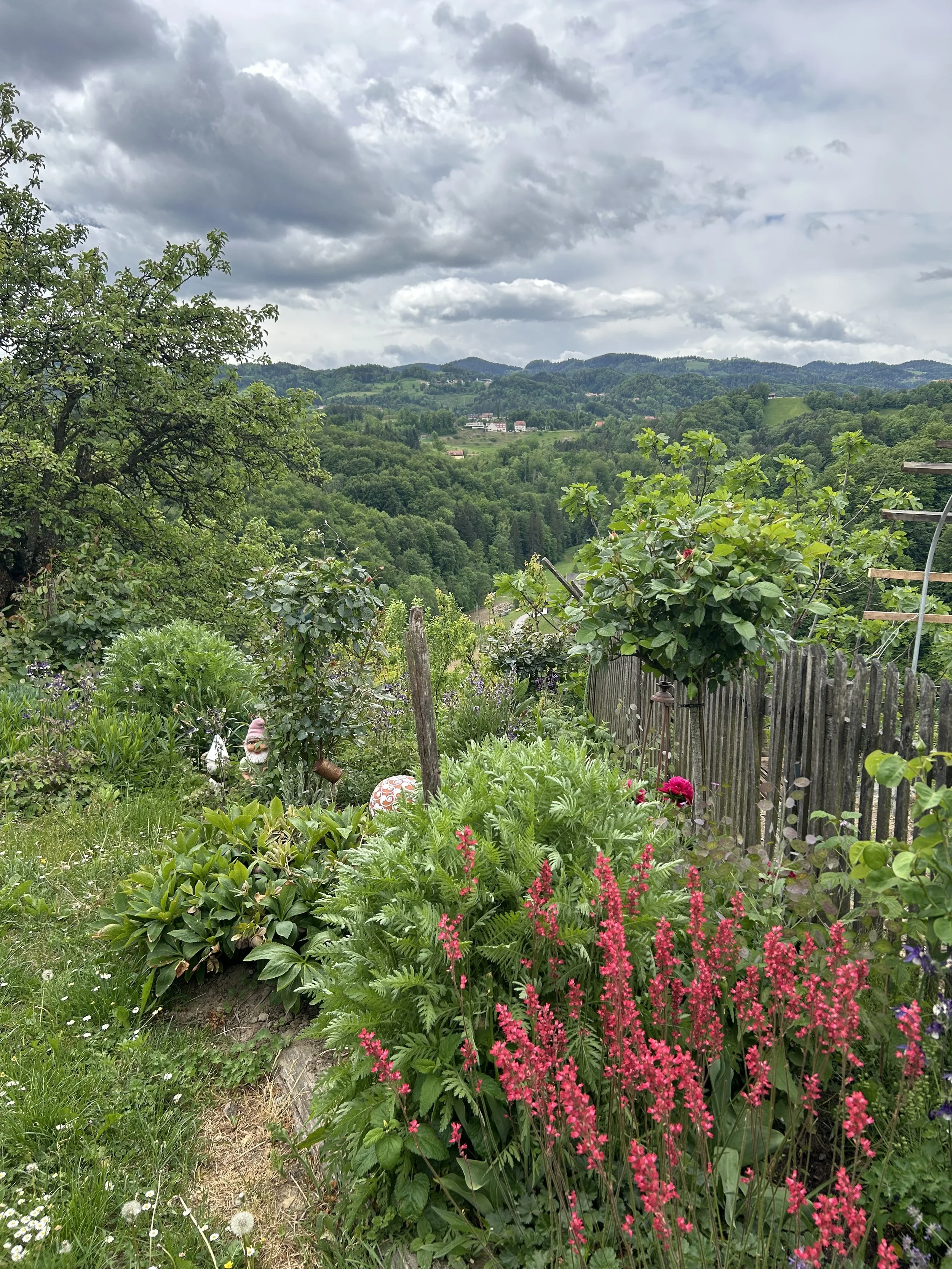
Amazing rolling hill of Styria, pretty sure Slovenia is over the over side but I might be facing the wrong way in this picture.
Turning off the road where we passed signs for Tscheppe and other wine makers we drove up a very steep narrow road and pulled up to what I can best describe as a chalet with an allotment full of herbs, plants and old bottles of Ex Vero, Gluck & Freude.I later found out Ewald uses the plants in the allotment for his biodynamic preparations for the vineyard.
The vineyard itself sits just outside the house and has around 8 hectares under vine that he converted to organics in 2004 after taking over from his father. The vineyard is co planted with Chardonnay (or Morillon it’s known as in this part of the world) and Sauvignon Blanc and is essentially split into 3 parts across the rolling hills Ex Vero I, II & III. The plots are determined based on the soil deposition with Ex Vero I having the most fertile soil which gets slightly poorer as you work your way up, which for anyone who has drank the wines before makes perfect sense as Ex Vero III is a wine that has so much concentration and power.
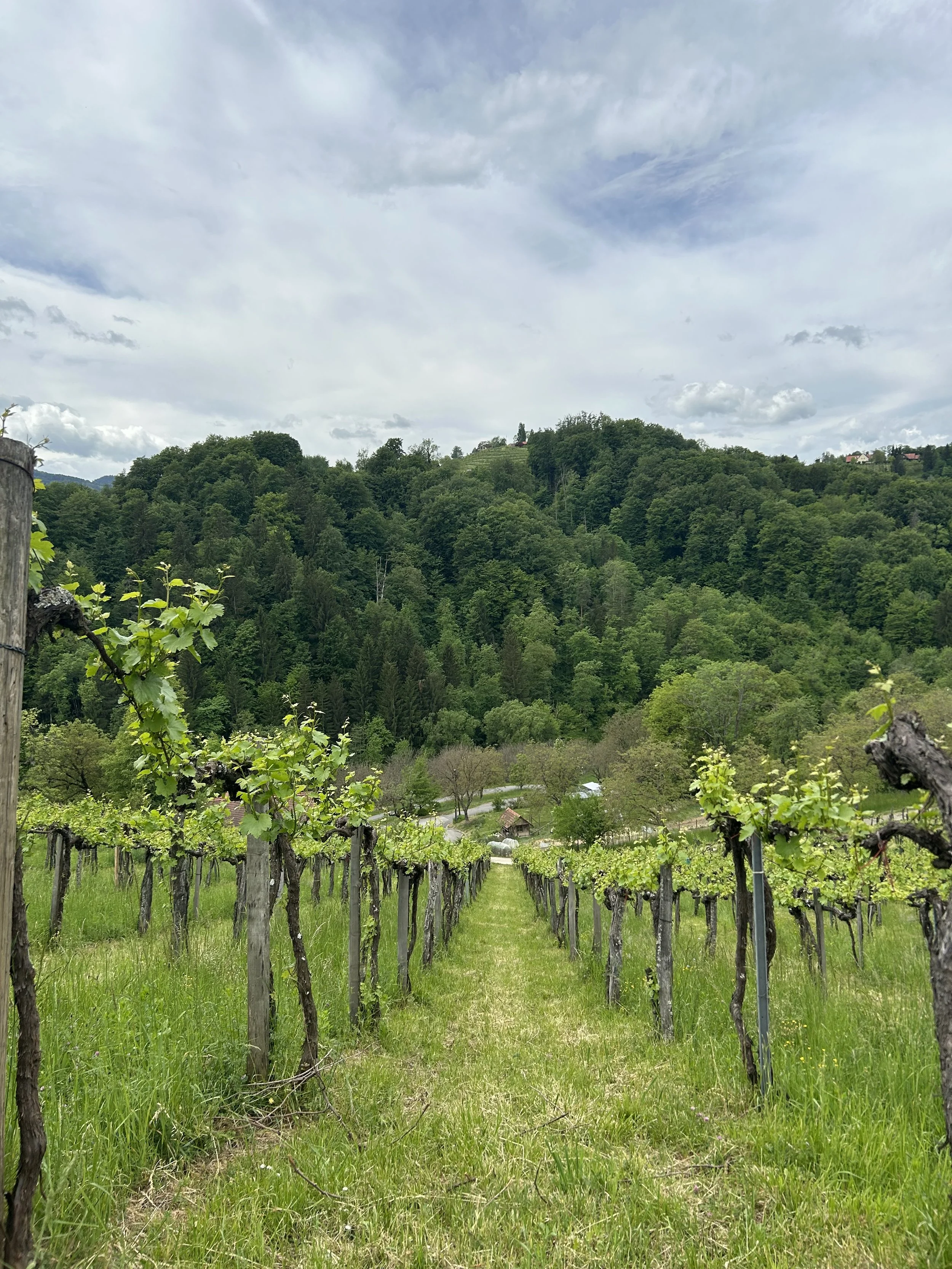
Standing at the top of Ex Vero I looking down…
What was both amazing and unexpected about the visit to both Ewald and the Musters was the discourse around grass, admitidley that sounds a bit mundane on paper but is actually a key component of organic viticulture and also highlights how conventional farming hinders biodiversity so much, which in an ever more volatile and unpredictable climate feels more important than ever. Ewald explained how in a conventional vineyard where chemicals are used you may have around 10-15 species of plants and grasses if you’re lucky, on the contrary a local university conducted a study on one of the plots in Sepp Musters vineyard and found nearly 60 different species.
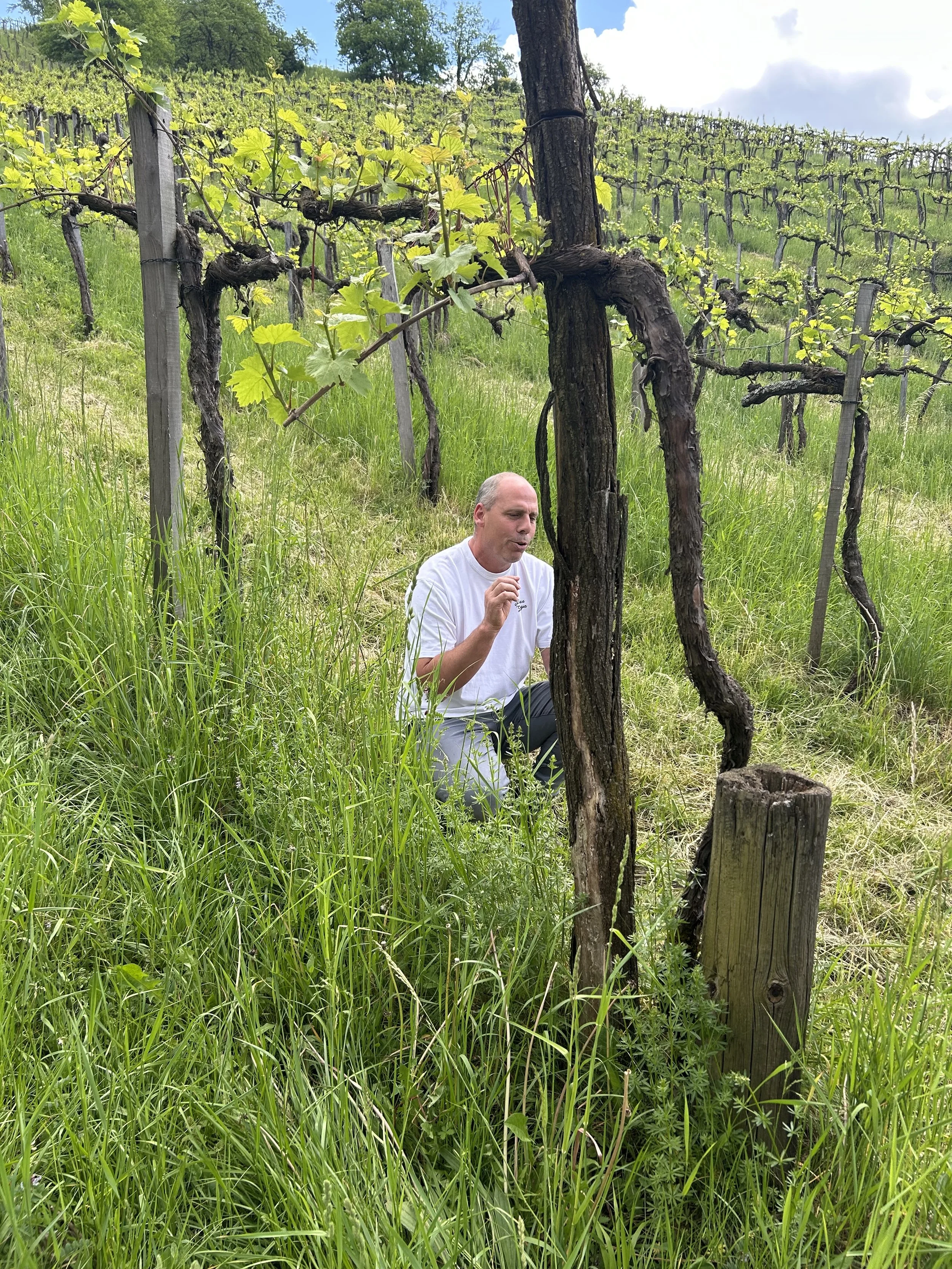
Ewald explaining about grass management between the rows of vines.
After tasting a number of different wines from Ewald, with some delicious cured meats and cheese we quickly set off to visit Sepp and Maria Muster, as with Ewald’s winery we pulled up to a beautiful house at the peak of another hill where we were surrounded by their 22 hectare farm which large amounts are surrounded by Forrests. Speaking with both Sepp and Ewald their winemaking ideology is very similar. Both focusing on the quality of the grapes and using the vessels as a way to translate the profile of the grapes rather than using the vessel to have an impact on the wine with Sepp Muster explaining “If the vessel has an impact on the wine, there is something wrong with the grapes”,. They also focus on micro-oxygenation during the ageing process that helps protect and stabilise the wines.
Both wineries produce really insane wines and if you’ve never tried them I couldn’t recommend them highly enough. My personal favourites from the tastings were:
Werlitsch Vom Opok Sauvignon Blanc - I can’t remember which vintage butt it had this beautiful tropical fruit profile with lots of savoury notes which is typical of Werlitch’s wines.
Muster Graf Sauvignon Blanc 2021 - Sepp explained to us that, in his view 2014 was his best ever vintage and 2021 is the only vintage since then to rival it and I can see why. The bottle we drank had been open a week and had only become more expressive rather than falling flat, mousey etc. It had beautiful notes of green bell pepper and gooseberry like acidity with this very crisp minerality.
Muster Rose Vom Opok 2021- again aлother blockbuster of a wine. A darker style of rose that showed some lovely meaty, savoury notes with lots of umph but a nice red fruited profile that helped to freshen it all up.
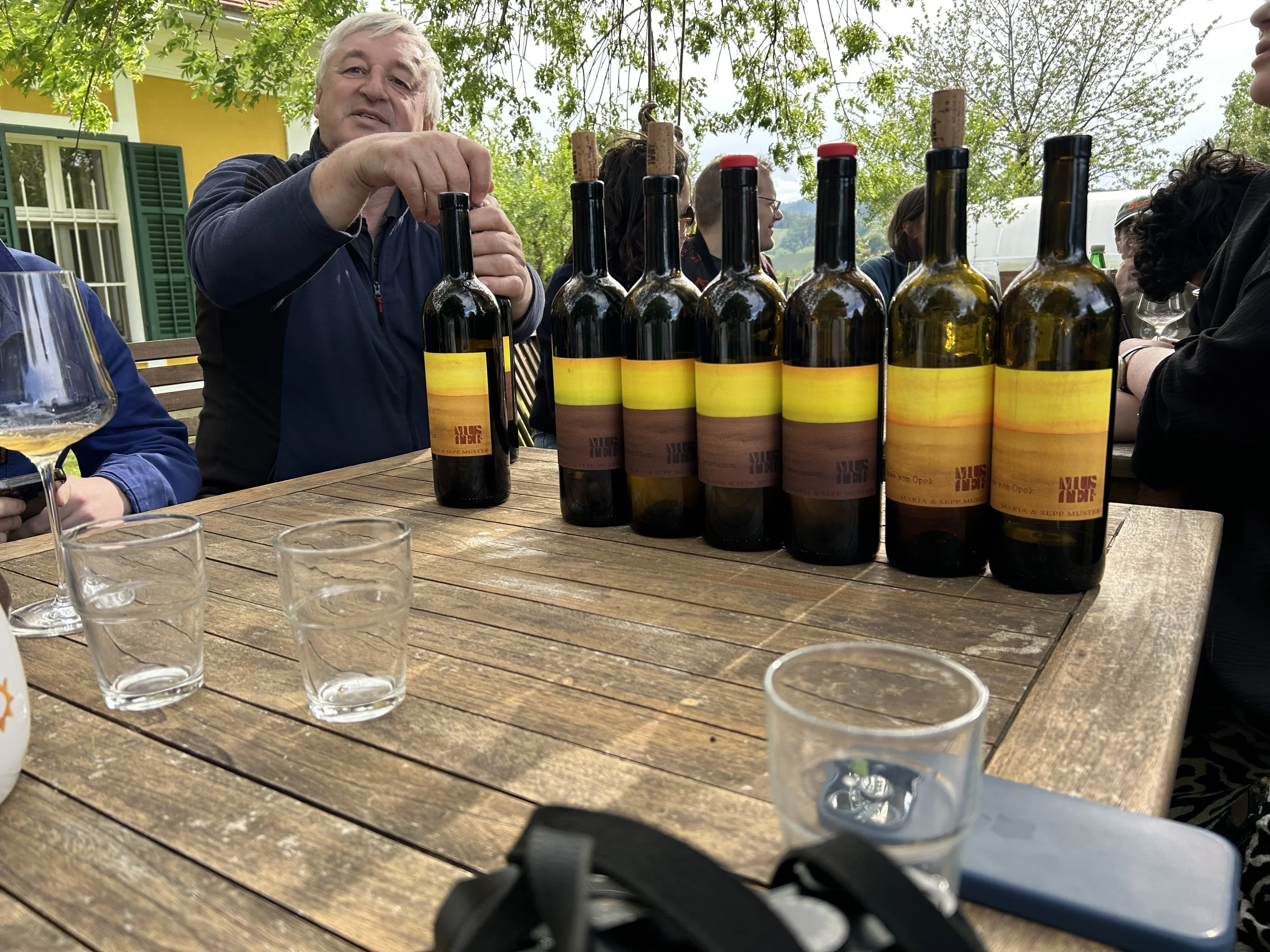
Lovely little line up
Peter Jones 16/09/2026