
Back in April I was fortunate enough to be invited to Georgia with Brawn to work (if you can call it that) at a collaborative event with Bar Brutal (Barcelona) and Stamba Hotel (Tblisi).
Georgia is a place I’ve wanted to visit for many years, having always been interested in the countries from the eastern bloc since a young age - I think it comes from my love of brutalist architecture and my general interest in the soviet union (I have no idea why). *Side note* Russia 1985-1999: TraumaZone by Adam Curtis is a really fascinating documentary around the collapse of communism in the Soviet Union if anyone is looking to enjoy 7 hours of raw footage with no narration.
Oh, yeah and given that it is the birthplace of wine obviously…
Georgia has a really interesting and somewhat unique wine making culture, using clay vessels called Qvevris (Tinajas in Spain, Anfora in Italy, Karas in Armenia). What makes them so amazing is that it is a centuries old bullet proof way of making wine. The qvevris are buried underground which helps regulate a constant temperature, alongside this, the porous nature of the qvevris allows micro oxygenation, therefore protecting the wine and creating a natural constant vortex inside the qvevris which keeps the juice in constant contact with the lees, adding more texture - all of this has been going on since around 6000bc this was well before the Egyptians were making painted statues of cows out of Nile River clay!
https://www.britishmuseum.org/collection/object/Y_EA35506
Once the event had finished we were taken on a tour heading West to the Imereti region. What struck me about the wines of Imereti was the delicate nature of them and how they contrasted so much to what most us have come to understand Georgian wines to be.. powerful tannic orange wines that shout loudly of the place they’re from.
First stop, just 30km outside of Tbilisi in the Mukrani Valley was Iago Winery whose 2 hectare vineyard farms only the Chinuri grape varietal, a thick white skinned grape. I was lucky enough to taste an array of wines which had vastly different lengths of maceration. From being pressed directly giving a super lean, mineral & orchard fruited profile - to wines that had been macerated for 6-7 months which took on a whole other dimension, almost like a typical wine from Friuli.
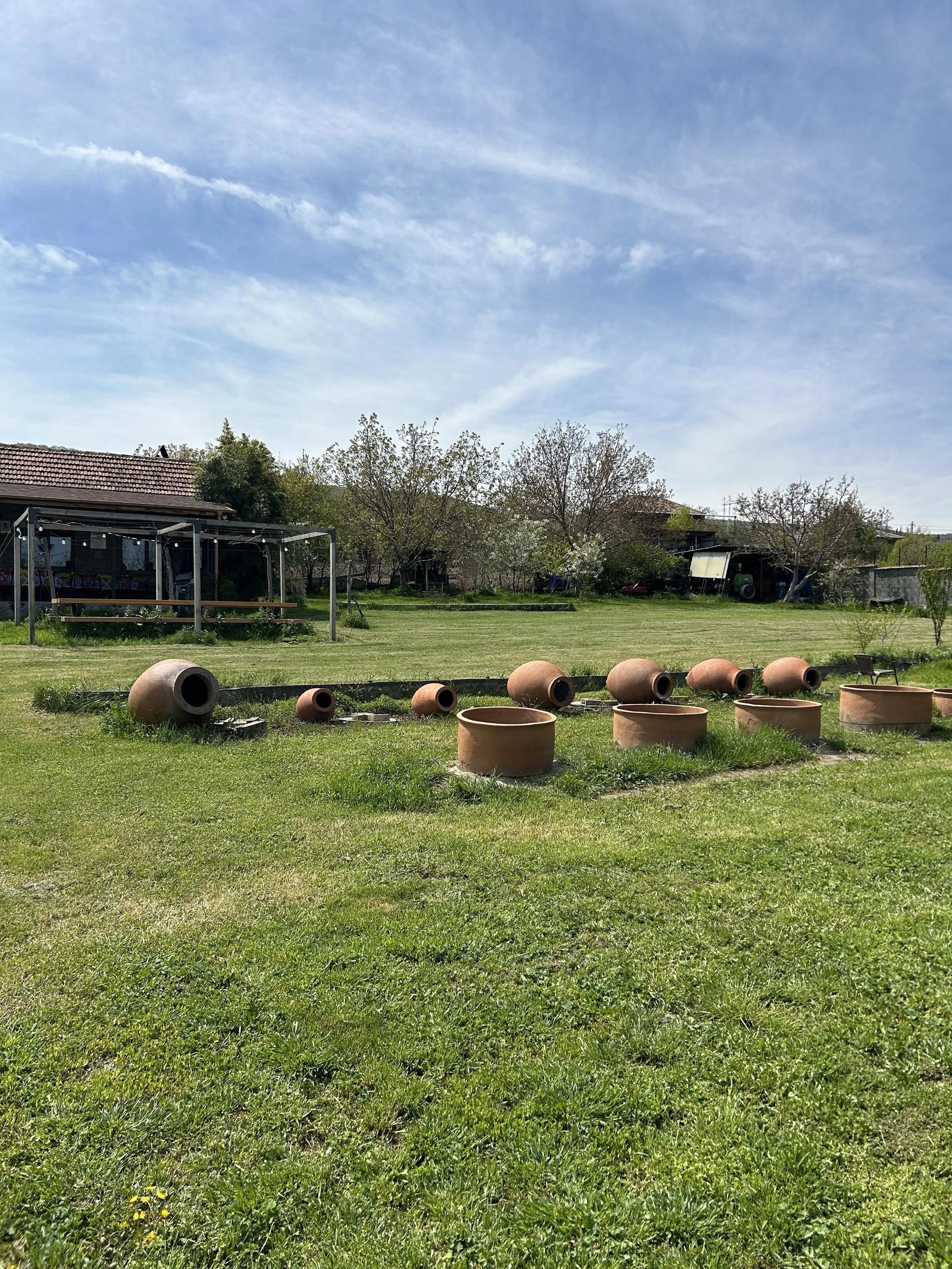
Qvevris sitting in the garden of Iago’s Winery.
Continuing down the highway towards Kutaisi, we pulled up outside a very unassuming Qvevri workshop.. However, this workshop belonged to Zaliko Bodjadze, a master qvevri maker who is one of the last of his kind. Wine makers come from far and wide to source his qvevris from the likes of Gravner & Vino di Anna.
Like any good wine the Qvevris he produces are so good because of the terroir they’re made from. The mountains behind his workshop produce clay that, when combined with the perfect level of humidity, it allows him to construct qvevris that are strong, durable and that have enough porosity to protect the wines during fermentation and ageing, which is essential in this process.
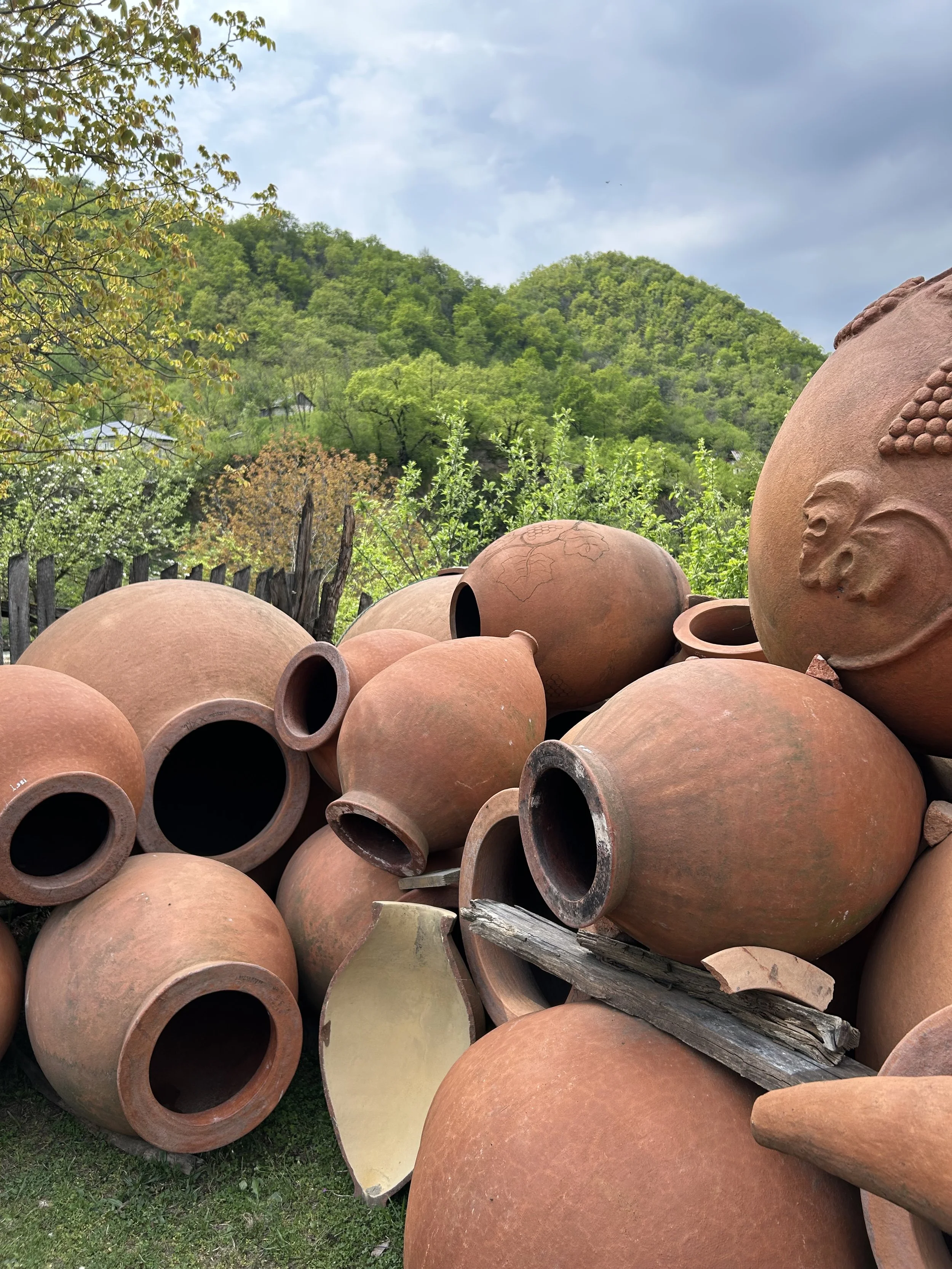
More Qvevris but this time a stack of qvevris sitting in Zaliko’s relatively empty workshop with the clay rich hills in the distance
Blown away by what I’d just seen, we moved onto a small village to the South East of Kutaisi to visit Archil Guniava and his daughter Mariam. Archil’s winery at his family home dates back generations but has only recently began commercialising his wine in the last decade or so. After tasting a few wines in the courtyard, he took us through to a small building, no larger than your car garage at home, to show us his cellar. Just poking out of the ground lay 6 or 7 qvevris where we tasted through Tsitska & Tsolikauri for the whites and Dzelshavi and Aladasturi for the reds. Mariam also makes a couple of wines herself in the cellar, most memorable for me was her Aladasturi which, to any keen blind taster would be forgiven for assuming it was a Poulsard from the Jura!
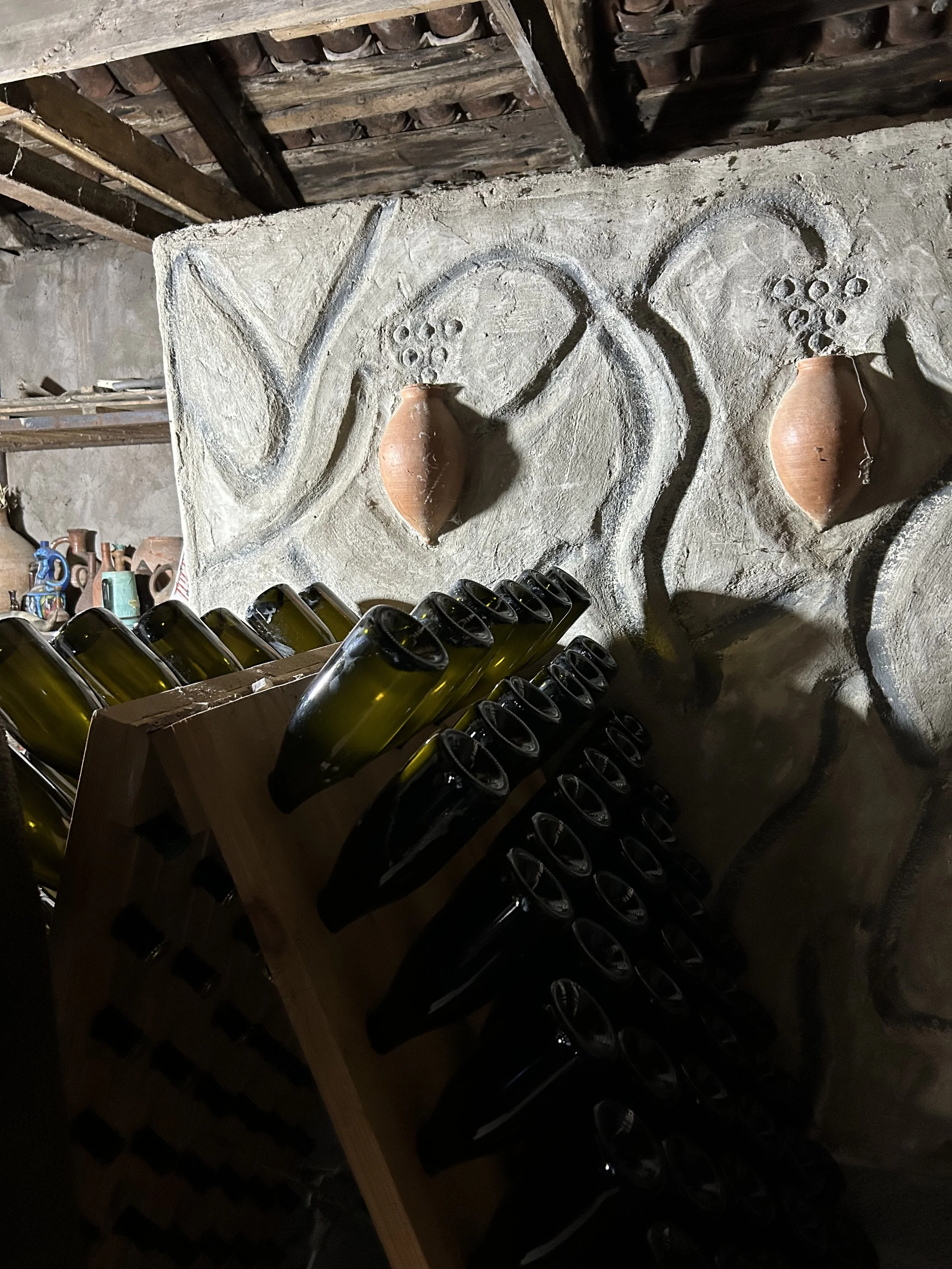
Archil’s & Mariam’s tiny but impressive cellar
Our last stop took us to one of the pioneers of the region, Ramaz Nikoladze. His small 1.5 hectare vineyard, grown over clay soils, has been farmed biodynamically since 2007. His wines epitomise my original point around the delicate nature of wines from this region . His direct press Tsitska had was almost like hybrid of Chenin Blanc from Anjou and Chardonnay from Mersault.. savoury, salty, rich, textural and super precise!
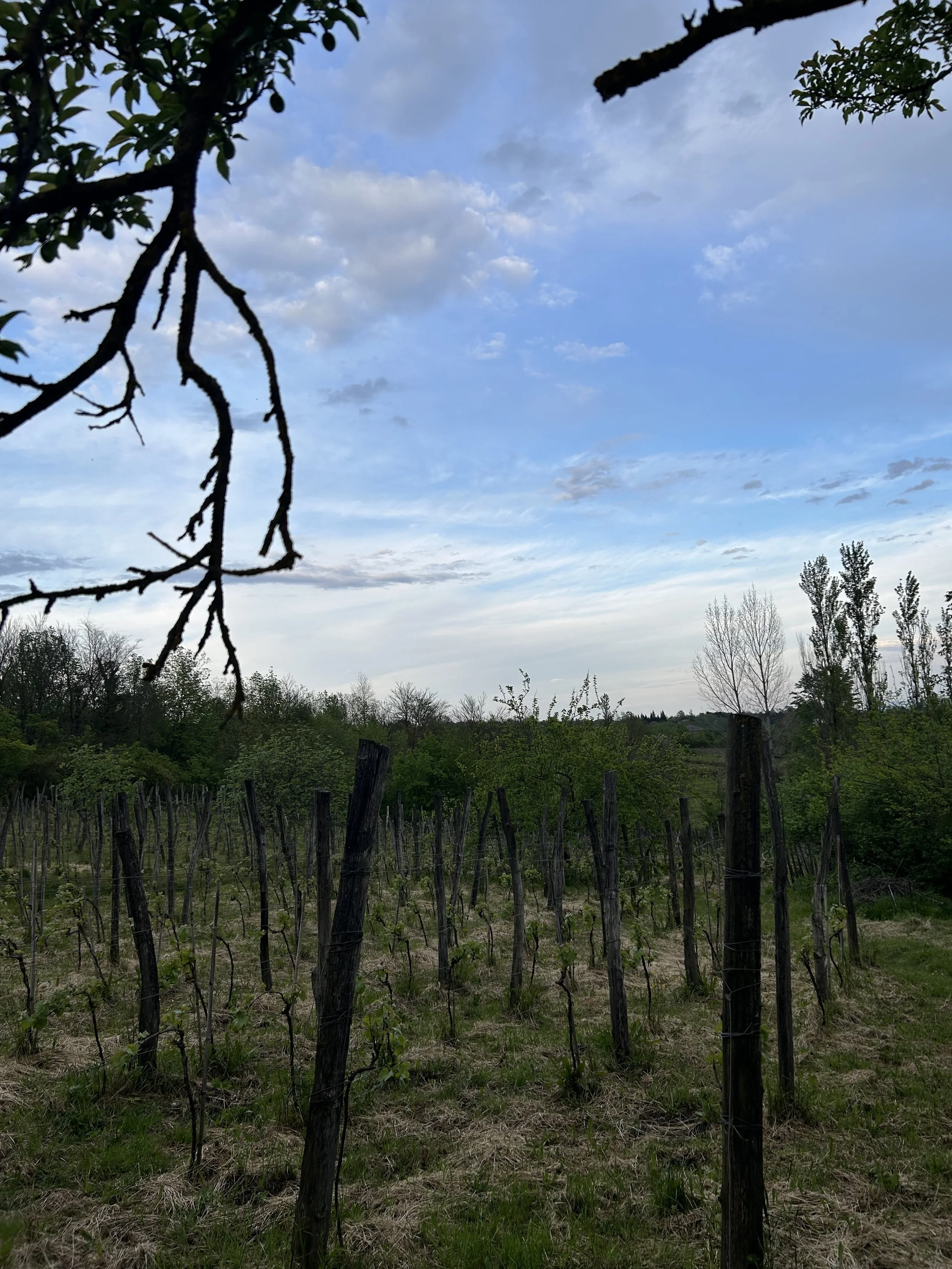
Ramaz Nikoladze’s vineyard just outside of his cellar,
This barely even scratches the surface of what I saw and has left me wanting to come back for even more. გაუმარჯოს !!**
**Gaumarjos!! Cheers in Georgian
Peter Jones 07.08.2026